
“You, O Lord, will keep them; you will guard us from this generation forever”
Psalm 12:7-8
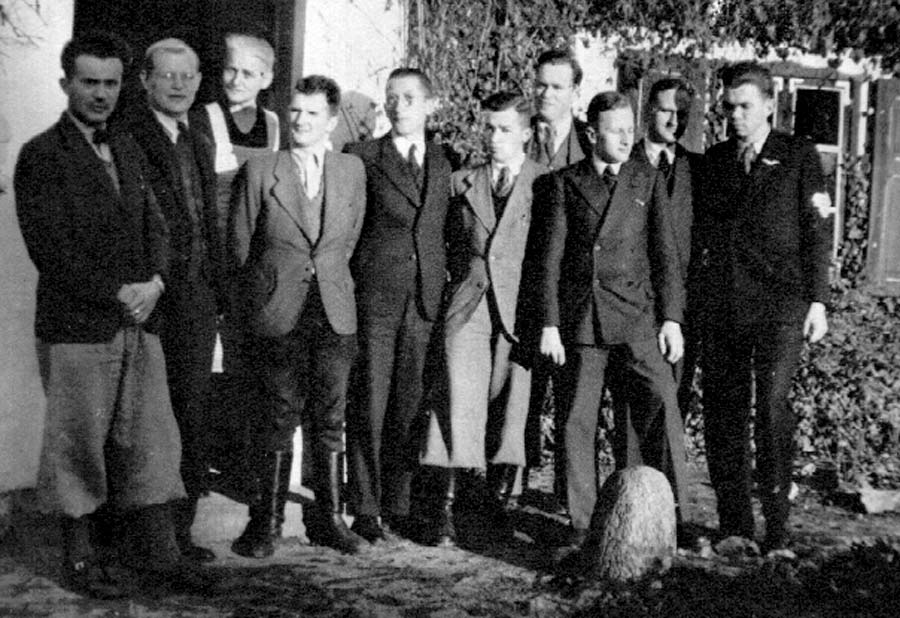
Ninety years ago, a group of pastors and elders gathered to write a declaration for the Church in Germany. From its rise to power in 1933, the National Socialist Party posed a grave threat to religious freedom and the integrity of the Church. This group of dissenting Protestant Christians formed the Confessing Church in opposition to the Nazi regime’s attempt to co-opt the Protestant churches and distort their teachings with their autocratic, “blood and soil” theology.
The Theological Declaration from the Confessional Synod of the German Evangelical Church which met in Barmen, Germany, would become the central theological statement of the Confessing Church under the rule of the National Socialists. Drafted primarily by Swiss theologian Karl Barth, it was affirmed by the Synod on May 31, 1934. For many Protestant churches, including the Presbyterian Church (U.S.A.), the Barmen Declaration remains a bracing guideline for their confession, teaching, and resistance to authoritarianism.
At a time when political ideologies again threaten to squelch individual freedoms and crowd out Christian theology with a social gospel of either the left or the right, the Barmen Declaration remains relevant. It can help Christians learn the difference between legitimate political activism and social ministry and that which is worldly and idolatrous. It can stiffen our resolve to bow the knee before no lord other than Jesus Christ, the Word of God.
As followers of Jesus Christ, we must be mindful, like Augustine, of the City of God and the City of Man, or as depicted by John Bunyan, the Celestial City and the City of Destruction. In its dual nature, the Christian Church must safeguard its faith by consistently evaluating its teachings in light of Scripture. Especially in turbulent times, we gain clarity on our struggle “against the rulers, against the authorities, against the cosmic powers of this present darkness,” using the weapons of the Spirit. Similarly, the church must always seek to be reformed by the Word of God as revealed in Scripture.
In light of this imperative, Presbyterians have insisted on the importance of specific bedrock values as defining elements of our identity. The Presbyterian Church (U.S.A.) has affirmed throughout its history basic principles of church order. These principles are part of our common heritage and are essential to our Presbyterian concept and system of church government. One of our most basic principles is stated in the Westminster Confession of Faith and in the Book of Order, F-3.0101:
God alone is Lord of the conscience, and hath left it free from the doctrines and commandments of men which are in anything contrary to his Word, or beside it, in matters of faith or worship.
The Preliminary Principles of the Presbyterian Church were published in 1788 by the Synod of New York and Philadelphia and included in their Form of Government. These principles laid the foundation for the Presbyterian Church’s governance. John Witherspoon is generally recognized as their principal author. Since our inception, Presbyterians have held the importance of the freedom of conscience, both in the civic and ecclesial realms.
The Presbyterian Church (U.S.A.) is today again roiled by controversy as the Olympia Presbytery has approved an overture to the General Assembly regarding LGBTQIA+ inclusion. It proposes changes to G-2.0104b in the Book of Order, adding homosexual, lesbian, and transgender people to a list of “protected classes” whom it seeks to protect against discrimination. Yet this proposal conflicts not only with the church’s traditional position of biblical sexual ethics, but also with our long-held commitment to freedom of conscience. The Equity Advocacy Committee (ACQ+E) argues that the overture does not disqualify anyone from serving in church ministries but only promotes inclusion. The litmus test for ordination or installation of officers in the church will now be whether one can embrace LGBTQIA+ inclusion.
The 223rd General Assembly (2018) of the Presbyterian Church (U.S.A.) affirmed that religious freedom should be “equal and common to all.” While religious freedom is essential, it should not be used to discriminate against others or impose views upon them. In other words, just as the civil courts of the United States have rejected claims that racial integration violated religious beliefs, so the church has affirmed LGBTQ+ civil rights and advocated for laws against discrimination based on sexual orientation. The Presbyterian Church (U.S.A.) stands against oppression and supports human dignity for all people. That is, the church has traditionally emphasized equality and opposition to discrimination while ostensibly upholding the liberty of conscience according to Scripture. It has sought a balance where the right to religious liberty and individual judgment in matters of faith, a freedom that must be “equal and common to all,” does not infringe upon the rights of others.
In the 219th General Assembly (2010), the Presbyterian Church approved Amendment 10-A. This amendment removed the prohibition on ordaining homosexuals and sexually active unmarried members as church officers. The church changed its policy on ordination and on marriage as a covenant between one man and one woman. Conservatives were assured that they could continue to hold a traditional interpretation of the Scriptures on these issues. Now, the latitude that held the church together for the past fourteen years is at risk of disappearing. The Olympia overture indicates that a candidate for teaching elders, ruling elders, and deacons will be asked to affirm an unspecified number (“LGBTQ+”) of gender identities and sexual orientations and behaviors. Clearly, this would violate our historic principle of freedom of conscience.
What are we to make of this? Alluding to Orwell’s novel Animal Farm, historian Victor Davis Hanson claims that totalitarianism always becomes far worse than the wrongs it seeks to correct in the first place. Over time, the hunger for power exposes the emptiness of claims to liberate the oppressed. Hanson wrote in a recent essay:
Something less violent but no less bizarre and disturbing now characterizes the American New New Left [sic]. It is completing its final Animal Farm metamorphosis as it finishes its long march through our cultural, economic, and social institutions. Leftists may talk of revolutionary transformation, but they aim to help friends, punish enemies, and keep and expand power.[1]
Overriding our historic freedoms in the church unleashes more trouble and confusion than any injustices the Olympia overture seems to remedy. It also sets aside our traditional Reformed manner of interpreting Scripture.
Eroding Religious Freedom
From the writer of Hebrews to Augustine, from Dietrich Bonhoeffer, Diet Eman, and Ernst Lohmeyer to the pastors of the Golden Lampstand Church in Shanxi, China, Christians have wrestled with how to live and bear witness under the pressures of a despotic state. Faithful witnesses to Christ in settings as diverse as first-century Rome, the Spanish Inquisition, Louis XIV’s France, the Third Reich, the Soviet Union, Communist China, and theocratic Iran inspire us and stiffen our resolve.
We seem to be devolving into a more intrusive and authoritarian state in America; to be sure, not yet the brutal totalitarianism depicted in Nineteen Eighty-Four, but a soft version akin to Aldous Huxley’s Brave New World. It is the oppression that lulls us into compliance, that seduces before it crushes the human spirit. Signs of this in our twenty-first-century society include ubiquitous surveillance, “cancel culture,” “wokeness,” and de-platforming on social media like Instagram, YouTube, Facebook, Apple, Google, and Amazon Web Services, which remove alternative social media platforms.
A long-serving Presbyterian pastor who I have known for many years reported recently that as he spoke to his congregation about the last election via Facebook Live prior to his sermon, a window popped up on the church’s computer screen with the message, “Your information about the election is inaccurate.” To his shock and that of his congregation, the server feed then immediately shut down. After issuing a warning, Facebook later allowed the church to resume its platform use. Such an incident is worrisomely authoritarian and would have been unimaginable even five years ago. Growing social media censorship should have alarmed us long ago, and prospects of quelling it now seem more remote.
China has recently implemented new regulations on religious activities to enhance the supervision of clergy and congregations. Chinese governmental strategy strives to integrate religion with communism and ensure allegiance to the atheistic Chinese Communist Party. Official policy requires religious groups to align with traditional Chinese culture and “Xi Jinping Thought,” the Chinese leader’s combination of Marxism and nationalism.
We might wonder if initiatives like the Olympia overture intend to shut down dissenting voices in our denomination, similarly, restricting religious freedom.
One consequence of human sin is our almost limitless capacity to deceive ourselves. Most of society tends to avoid the truth and disregard any information that causes discomfort. Whoever reinforces its illusions is in control, while anyone who tries to dispel these illusions is victimized. This is the root cause of its hostility towards the church and the gospel it preaches.
The gravest threat to humanity is not nature, war, or disease but our idolatry, our inability to overcome our delusions. At specific points in history, collective delusions remind us that humanity itself is its own most significant danger. This is true not only on an individual but also on a societal level. Examples of the detrimental effects of mass delusions include the witch hunts in Europe and America during the 16th and 17th centuries. Acts unimaginable for individuals become possible when society is engulfed in distorted thinking. The collectivism that enables such acts erodes the infinite value of the individual as a being created in the image of God. It denies that society is an abstract concept; it does not make decisions or possess moral agency. It is individuals within society who commit either good or evil acts.
Authoritarianism consolidates power to control the masses through dulling the mind. These days, even in the church, people often display little capacity for reflection, meditation, or questioning. We forget the importance of sound theology––of cultivating in us the mind of Christ, as Presbyterians have long prioritized. In our tumultuous world, many yearn for a more ordered one. Hierarchical powers offer an answer to this: relinquish responsibility for our consciences and conform to a prescribed social agenda. However, it is our individual responsibility before God in the context of the Body of Christ that gives our life vitality and creativity.
Fifty years of sexual revolution and social change have eroded the traditions of American life, including those of the Presbyterian Church. In this transformation, we do well to remember that the subjective freedom of the church stands under the objective reality of Scripture. The church’s authority is an authority under the Word and accountable to it. The integrity of the church’s witness follows God’s acts of revelation and salvation that establish the church and the individual Christian. Our personal and corporate integrity is measured by obedience to the Word, wherein we find that authority and freedom are not opposed but in correspondence.
How Should We Then Live (Together)?
The church is currently theologically divided. One side aims to eliminate racism, sexism, and other “phobias,” while the other side fears that we are abandoning our heritage of church and nation in pursuit of these ideals. This cultural chasm stems from a lack of connection to the lasting tenets of our faith, which provide us with values and meaning in the modern age.
Dietrich Bonhoeffer and Karl Barth grappled with understanding and fulfilling the Christian calling during the dark times of Nazism. The eroding of the church’s witness was not on account of modern civilization per se but rather its tendency to alienation, collectivism, rationalism, and loss of faith grounding, making the church vulnerable to the warped ideology of the Third Reich. In its attempt to apply theology to contemporary problems, Progressive theology sometimes confuses the imperfect world of politics with divine revelation. This blinds the church to the dangers of authoritarianism.
Can we overcome this temptation? Like the West in general, the church has become decadent and vulnerable to demagogues and political manipulators. It is unaccustomed to sacrifice, unimpressed by scriptural reason, and careless about virtue. The rise and fall of civilizations throughout history suggest similar patterns of ease and concentrated wealth leading to decadence and idleness.
We cannot redeem or reform the church by our own efforts, but the Lord calls us to be faithful in our endeavors rather than focusing solely on success. We have an opportunity to bear witness and potentially have a positive influence on our communities. This will require a comprehensive approach.
Karl Barth reminds us in his Church Dogmatics:
The Church as the kingdom in which the freedom of God’s Word operates is an assembly of men. … This Word has the power to affirm itself and to keep itself pure in the world. … Where this power as such is recognized and experienced, where it is not merely suffered as judgment but is also believed as grace and finds obedience, where then the testimony of Scripture is accepted, there arises and subsists relatively, mediately and formally, utterly dependent upon that acceptance and related to it, but within these limits quite really, a human power and freedom correspond-ing to the power and freedom of the Word of God.[2]
How should we then try to live together in the power and freedom of the Word of God? Answers to this question vary. In Live Not By Lies, for example, Rod Dreher, a Christian, emphasizes the importance of resisting falsehoods and building “oases of truth” in our communities. Dreher’s title echoes Alexander Solzhenitsyn’s essay, “Live Not by Lies,” reminding us that personal non-participation in lies is crucial for our liberation.
First, Dreher recommends that we restore order to our minds and model a life free from cultural psychosis. We must seek time for reflection to free ourselves from the undue influence of popular entertainment and the media.
Second, we must be willing to share information that counters misinformation and groupthink while maintaining peaceful spirits and disseminating the truth as best we can. At times, humor may be a tool to diminish the authority of demagoguery. Certainly, thinking theologically, Dreher would agree, is crucial in this effort,
Third, Dreher advocates that we need to establish parallel structures within a totalitarian society. These structures help support the individual standing on conscience. As an outpost of heaven, he claims, the church can be more effective than political operatives, persuading and subverting in the hope of a new order. Dreher discusses the importance of small groups, like church groups, in providing support, shelter, learning, and accountability, echoing Marxist ideology’s idea of resistance cells. Such groups also offer spaces for prayer, reading Scripture, discussing current events, and resistance training.
As promising as Dreher’s call for parallel structures may sound, however, it comes with temptations. The church of Jesus Christ is without parallel in its structure, being, and purpose. It is not rightly understood as one means of resistance among others. Nor does it live from one truth among others and does no one any favor to suggest that he or she may find peace or comfort elsewhere. Indeed, the church squanders its time, energy, and resources if it seeks to establish parallel structures, and so do its pastors.
Rather, given the great challenges the church faces today, pastors would do well to devote themselves more fully to providing better teaching, preaching, and pastoral care, and so would congregations in supporting them to do so.
We should all support groups for Bible study, prayer, and encouragement. We should also seek to fulfill our social and civic duties. We should resist the many temptations of our day to live by lies. But we need now more than ever to rediscover the gift, truth, beauty, necessity, and unsubstitutibility of the church of Jesus Christ.
The churches of the Reformation affirmed the preaching and hearing of the Word of God and the right administration of the sacraments as marks of the true church. Under authoritarian pressure, however, these marks risk being compromised as the state demands subservience. Bonhoeffer and the Confessing Church were compelled to engage in this struggle. Eventually, Bonhoeffer concluded, “He who separates himself from the Confessing Church separates himself from salvation.”
Bonhoeffer was appointed by the Confessing Church to lead a new “preachers’ seminary,” The crisis affecting the university faculties and churches led the Confessing Church to provide theological education to train future pastors. These seminaries provided rigorous theological training until the state eventually shut them down. When faced with the question of how to live under state coercion, Bonhoeffer offered the following counsel:
1. Never act from a position of uncertainty.
2. Never act alone.
3. Never be hasty or allow yourself to be pushed. God can open what is locked up.[3]
These principles suggest ways we can fortify ourselves to live faithfully under pressure. They should not come as a surprise, as they have been a source of strength for Christians since the early days of the church.
Since “our struggle is not against enemies of flesh and blood,” we trust God. There is no victory apart from him. We will be effectual as he is at the center of our lives and struggle. If he is not at the center, our witness fails, and we flounder in our fight against evil. And yet the Lord tells us through the apostle Paul, “Do not worry about anything” (Phil. 4:6); we are to be anxious about nothing but to live in a deep sense of trust that God is our Protector and Savior. Even when we walk through the valley of the shadow of death, we fear no evil.
Therefore, we are free to live with abandon under God’s Word as witnesses, renouncing the world and its ways. In making decisions about who to associate with, what jobs to accept, where to live, and whether to buy products made in countries with inhumane work conditions, we contribute to the world’s well-being rather than our convenience. We pay attention to the stewardship of our lives and turn our backs on the agendas that conflict with our values. We embrace wisdom and join the resistance.
And as the church has resisted with various strategies according to its context, some common themes emerge.
The family constitutes the crucial cell for Christian formation. Christian families are what Calvin called “little churches,” places to inculcate a moral imagination and a sense of the true, the good, and the beautiful. Although the Reformation began as a theological dispute, it produced sociological and practical implications. As Calvin wrote, “What God intended was that the priests should lead the way in divine service, and the people take example by what was done in the temple and practice it individually in their private houses.”[4]
The Reformed Protestants aimed to establish the nuclear family as a spiritual community, mirroring the broader church of Christ. Huguenots, or French Protestants, viewed the home as a “holy household” organized, pure, devout, and capable of instructing its children in the ways of the gospel. These attributes were highly regarded and pursued in Protestant households in early modern France. As the most significant theological and spiritual influence on the French churches, Calvin guided family and domestic piety through his sermons, commentaries, Institutes of the Christian Religion, and correspondence from Geneva. Household practices included prayer, reading and singing of the Psalms, reading of scripture, discussing sermons and other religious works, discipline, and confession. Singing of the psalms mainly brought Reformed communities together and reinforced the theme of faith amid suffering. The well-being of the community of saints significantly relied on the godly functioning of the nuclear family. Consequently, these practices were of great interest to the consistories (sessions) and the leaders of the churches.
For the church to withstand state pressure and persecution requires a clear confessional identity. The church confesses its faith in Jesus Christ, stating its beliefs and resolutions. It elaborates its beliefs and dogmas to bear witness to Jesus Christ. It does so not as a division or sect within the church but as a representation of the entire church, which is one, holy, catholic, and apostolic. The unity and continuity of the church enable it to maintain its identity during challenging and changing times. In the face of competing worldly ideologies and sometimes heretical theologies, a genuine church confession denies false doctrines and presents a unified witness. This is what the Barmen Declaration achieved by opposing the “Führer principle” and the theology of the Reich Church.
The Confessing Church here opposed a totalitarian State with utter frankness and without any personal security. They spoke of God’s testimonies before kings and were not ashamed (Ps. 119:46). They had to be forsaken, disavowed, and maligned even by those who, like them, bore the name of Christian. They had to be prepared for that, and they were prepared. But the testimony that God is God stood firm.[5]
Barth offered deep insights into freedom of conscience. Freedom, he said, is not autonomy or self-sufficiency. Instead, it is precisely the opposite: dependence upon God. True freedom lies in being bound to God, maintaining a relationship with God, and aligning with the divine way revealed through Jesus Christ. Barth emphasized, above all, that freedom is a gift from God. It liberates humanity from bondage and enables thankful obedience. This freedom extends beyond the present life; it encompasses our earthly existence and our eternal identity as God’s children.
While Barth did not specifically address freedom of conscience in these terms, his broader theological framework emphasizes ethical living. Evangelical ethics involves living in correspondence with God’s freedom and purposes. It is rooted in our relationship with Christ and our response to God’s grace. Barth viewed freedom as a divine gift that connects us to God, shaping our ethical choices and guiding our lives. His theology underscores the importance of living in alignment with God’s will rather than seeking autonomy apart from God.
For the church to resist coercion and the oppression of despotism, it needs to live out of an existence beyond the reach of authoritarian systems, as was possible to an extent in Cold War Poland and the former East Germany. The church’s prayers and ministry brought hope and fortified its members. A resilient and resistant church gave people strength to remain faithful to Jesus Christ and reminded them that there was still freedom in this world.
Under the conditions of a similar tyranny, Huxley wrote:
Meanwhile, there is still some freedom left in the world. Many young people, it is true, do not seem to value freedom. But some of us still believe that, without freedom, human beings cannot become fully human and that freedom is precious. Perhaps the forces that now menace freedom are too strong to resist for long. We still must do whatever we can to resist them.[6]
Perhaps we have an unparalleled opportunity today to show young people what true freedom is. In any case, “For freedom Christ has set us free; stand firm therefore, and do not submit again to a yoke of slavery” (Gal. 5:1).
Also see, “Shall the Fundamentalists Win?”, and if you wish to pledge to stand against this overture, please sign your name here.
[1] Victor Davis Hanson, American Greatness, February 7, 2021.
[2] Karl Barth, Church Dogmatics I/2: 696.
[3] Eberhard Bethge, Dietrich Bonhoeffer: Man of Vision, Man of Courage, 598.
[4] John Calvin, Commentary on the Book of Psalms, Psalm 134.
[5] Arthur Cochrane, The Church’s Confession Under Hitler, 208.
[6] Aldous Huxley, Brave New World Revisited, 118)